
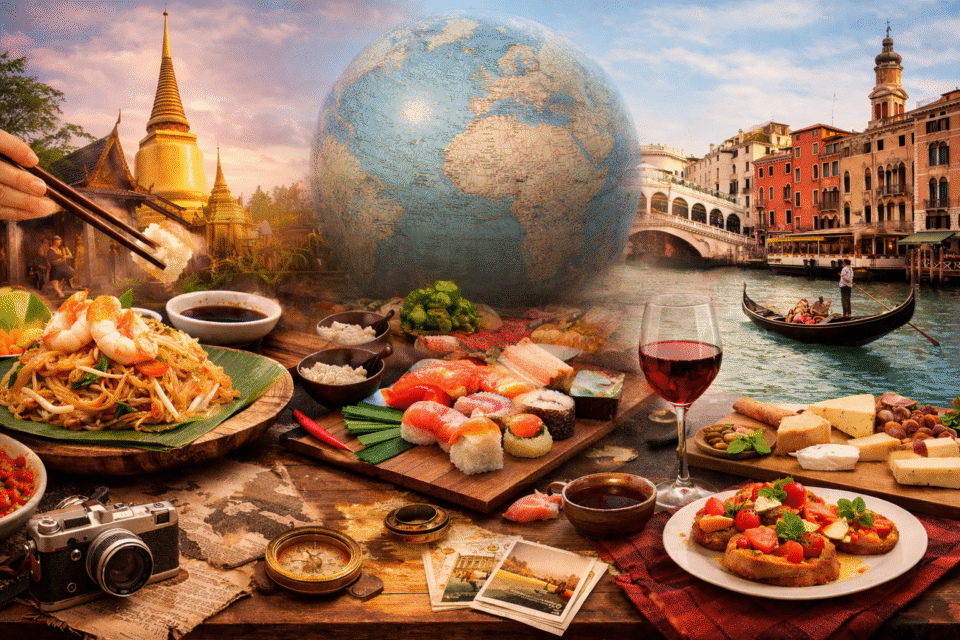
There is a very strong relationship between food and travel. When individuals are on the move, they do not want to see new locations; they savor them. Food is turned into a strong cultural manifestation that reveals the historical, geographical, traditional, and daily life. Food and local culture allow tourists to understand how people live, eat, and interact. The connection between food, culture and traveling makes every trip much more valuable and significant.
Food as a Cultural Identity
Food is a story that is told by every culture. Ingredients, cooking techniques, and recipes used in the past are a reflection of the climate of a region, resources, and historical factors. Rice-based foods dominate most Asian cuisines due to agricultural patterns, whereas wheat forms the main component of food in some regions in Europe and India. The spices, herbs, and styles of preparation have a tendency to evolve over the centuries, and trades, migration, and local culture have influenced them.
After trying local food, the traveler truly gets to experience culture in its purest form. A conventional lunch gives a glimpse of family set ups, religion and social principles. Food discloses values, food conservation, and generational transfer of a community.
Travel Encourages Culinary Exploration
Travel inherently makes people leave their comfort zones. When in a new destination, curiosity will make the people sample foods that they may not consume at home. Local markets, small cafes and street food stalls turn into entry points into the culture. These destinations provide authentic tastes and the normal experiences that are missed in guide books.
It is through the discovery of local food that the travelers get to know the destination beyond these landmarks. Food assists in breaking language barriers as well as forming a common experience. Even a plain lunch can be a source of talk, friendship and unforgettable moments.
Local Cuisine Reflects History and Geography
Food has a strong association with a place in terms of its history and geography. Coastal areas also depend heavily on seafood whereas mountainous areas incline towards packed foods and hearty meals. Colonial influence, trade routes and migration patterns have indelibly imprinted regional cuisines.
Travel allows people to understand these influences firsthand. Eating local food helps travelers recognize how history shapes present-day culture. Each dish carries a story, whether it comes from ancient traditions or modern adaptations.
Food Creates Emotional Travel Memories
Tourists tend to have memories of places based on their tastes. Something as simple as a warm bowl of soup on a cold evening or a meal together during a festival becomes a great emotional anchor. Food is an experience that involves senses, which makes travelling more colorful and intimate.
Such sensory memories remain well beyond the end of the trip. The taste that one is used to can take them to a certain location and time immediately. The food makes traveling more of an emotional process, not merely a physical one.
Cultural Respect Through Food
The consumption of local food items demonstrates that a culture is respected. By eating local food, purchasing products of locals, and exploring food culture, travelers become more responsible towards a destination. Food promotes national values instead of superficial tourism.
Learning about food traditions such as the rules of eating or meal schedules in a particular culture also enhances cultural awareness.The moment when individuals are curious and respectful of food makes the process of traveling more meaningful.
Food Connects Travelers to Local Communities
Food brings people together. The eat-outs provide interactive experience between tourists and host communities. Food brings authentic human socialization whether people prepare it at home, on food tours, or in a community kitchen.
Tourists who interact with local food societies get first-hand information about living. Such links make trips seem more like a narration than an individual experience.
Conclusion
The connection between travel and food is very close to the culture. Food provides the entry point to the world of traditions, history, and human relationship. Travel adds to this experience by putting food into its culture. Food and travel make trips significant events of exploring the world. With each bite, the travelers get to know not only new flavours, but also new perspectives on life.
